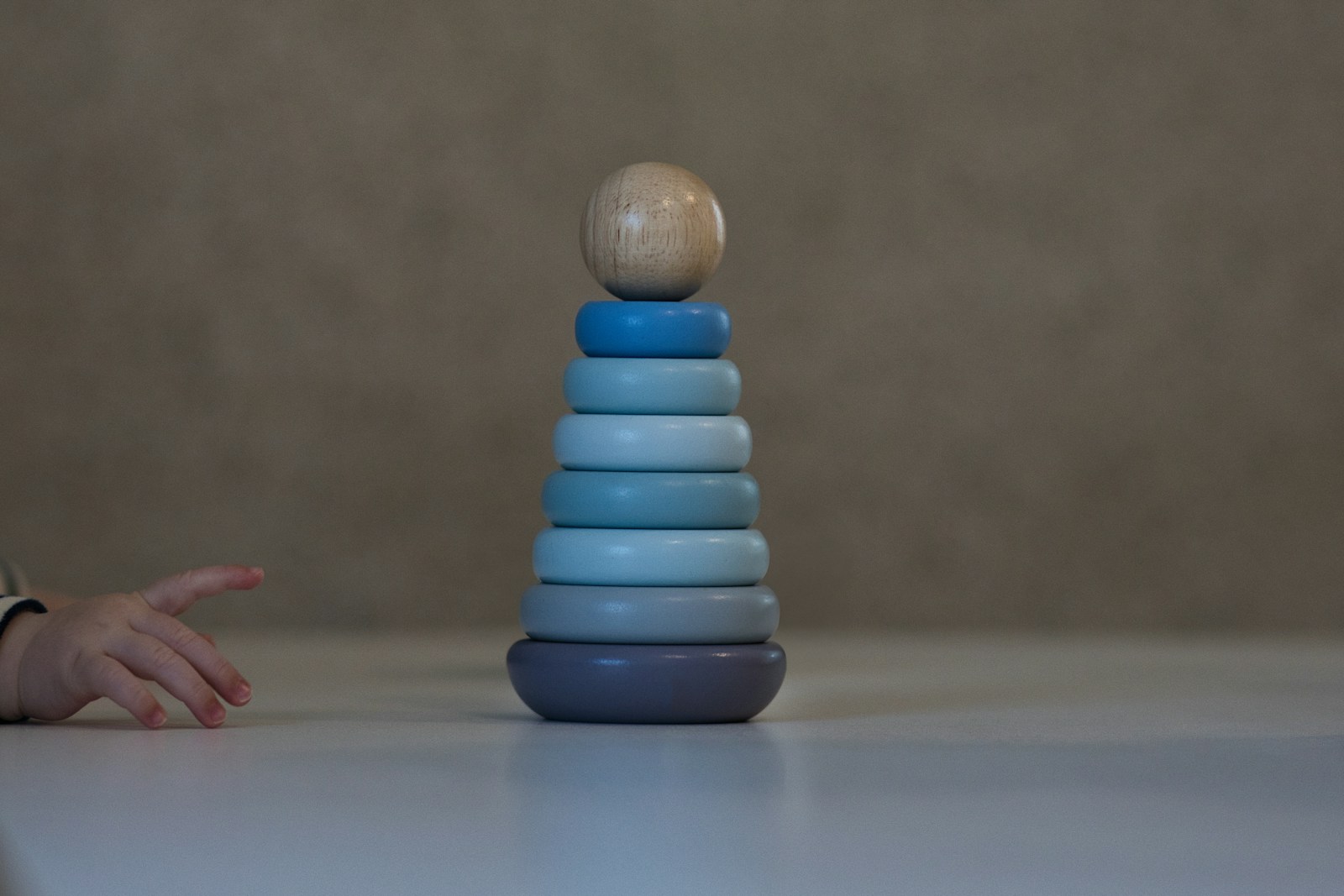
The word STEM made me nervous at first. It sounded like flashcards, coding apps, and a two-year-old being quizzed on his shapes. The more I read, the more I realized it is almost the opposite. Real STEM in the first two years is a baby dropping a spoon off the highchair for the ninth time, watching it fall, and learning something true about the world. It is cheap, it is mostly free, and it is already happening. My job is just to set the stage for it.
This is not the full plan, just a few of the activities I keep coming back to, and why they do more than they look like they do.
What STEM actually means before age two
Strip away the acronym and there are really four threads running through everything, from the first week home to the second birthday:
- Cause and effect. Shake the rattle, it makes a sound. Cry, and someone comes. This is the earliest logical thinking there is.
- Spatial reasoning and physics. Which cup fits inside which. What happens when the tower gets too tall. Gravity, balance, volume, all learned by hand.
- Early math. Not numbers on a page. Counting out loud, sorting by color, noticing a pattern and guessing what comes next.
- Language. Narration is the through-line. Naming what he sees, hears, and touches is how the other three threads get words attached to them.
None of this needs a curriculum. It needs a responsive adult and a few well-chosen things within reach.
A few activities I keep coming back to
You do not need much, and you do not need to buy most of it. A handful of examples that each carry more than their weight:
- The highchair drop. He drops the spoon, I hand it back, he drops it again, watching. He is not testing my patience, though it feels that way. He is running the same experiment until the result is reliable. A feather and a block fall differently, and that difference is his first physics finding.
- Stacking cups. Stack them, knock them over, repeat. Height, balance, and gravity, learned with his hands. The same cups later become nesting, pouring, and counting.
- Hide and search. A cloth over a favorite toy. When he starts to lift it and look, that is object permanence: things exist even when I cannot see them. It is a real cognitive milestone hiding inside a game.
- A sensory bin. A shallow container of dry oats, a scoop, a cup. Full, empty, pour, spill. Early volume and measurement, disguised as a mess.
- Sorting and patterns. Once he is a toddler, sorting blocks into matching colored bowls, or laying out red, blue, red, blue and pausing on what comes next. Classification and patterns are foundational math, and small kids love the order of it.
- Narrate everything. “This one is heavy. That fell down. You made green.” Talking through what is happening is one of the most evidence-backed things I can do, and it costs nothing.
One guardrail I am holding onto from the research: if there is any screen time at this age, keep it short and lean on the genuinely good stuff. A real ramp beats a video of a ramp every time.
The best STEM tool isn’t a toy
After all the reading, the thing that stuck with me most is not on any toy list. The single most powerful thing I can do for his developing brain is to be present and responsive. To narrate. To hand the spoon back without sighing. To notice what he is curious about and follow it, instead of steering him to the next activity.
The blocks help. The sensory bins help. But the engaged adult on the floor next to him is the whole engine.
If you want the rest, I have organized STEM play by age, from the first weeks through two years, so you know what to reach for at each stage and what can wait. Download the free app to see the full stage-by-stage plan.
A little scientist does not need a lab. He needs a safe floor, a few good things to act on, and someone who keeps handing the spoon back.